The hardest metric in chronic disease support is retention. This program kept everyone.
Most programs lose half their participants within the first month. This WhatsApp-based patient support program ran for two years, weekly, and every enrolled participant stayed for all of it. This is a case study in what makes that possible.
100% retention over two years is documented evidence that this channel strategy works — and that is what a DAP needs behind it.
A Phase 3 diversity action plan that specifies WhatsApp-based outreach and promotora-led engagement needs more than a channel preference — it needs documented evidence that the approach produces results. This program provides exactly that: two years of weekly operation, 100% participant retention, and patient-reported outcome improvements measured throughout. When FDA reviewers evaluate whether a recruitment program reflects realistic community engagement capacity, a cited evidence base of this depth is the difference between a credible operational plan and a wish list.
FDA Diversity Action Plan Advisory →Built on WhatsApp because that is where Hispanic patients already were
The program was built on WhatsApp because that is where Hispanic patients already were. Not because it was innovative but because it was obvious once you listened. Hispanic patients who would not reliably engage with email, SMS, or patient portal communications participated consistently through WhatsApp. The channel is not neutral.
Being present where patients already communicate with family and community is a prerequisite for trust, not a feature of it. The infrastructure to run patient support groups at clinical standards through WhatsApp did not exist off the shelf. It was designed and built from the ground up.
The result was recognized by Fierce 50 as a breakthrough in non-English healthcare outreach, not because the technology was novel, but because the design was precise about why the channel mattered and how to run it responsibly.
Why channel selection is not a communications decision
For Hispanic patients, WhatsApp is not a messaging app. It is the primary medium through which family relationships, community trust, and health information all travel. Choosing a different channel would not have been a neutral technical decision. It would have been a statement about who the program was really for.
How the groups ran
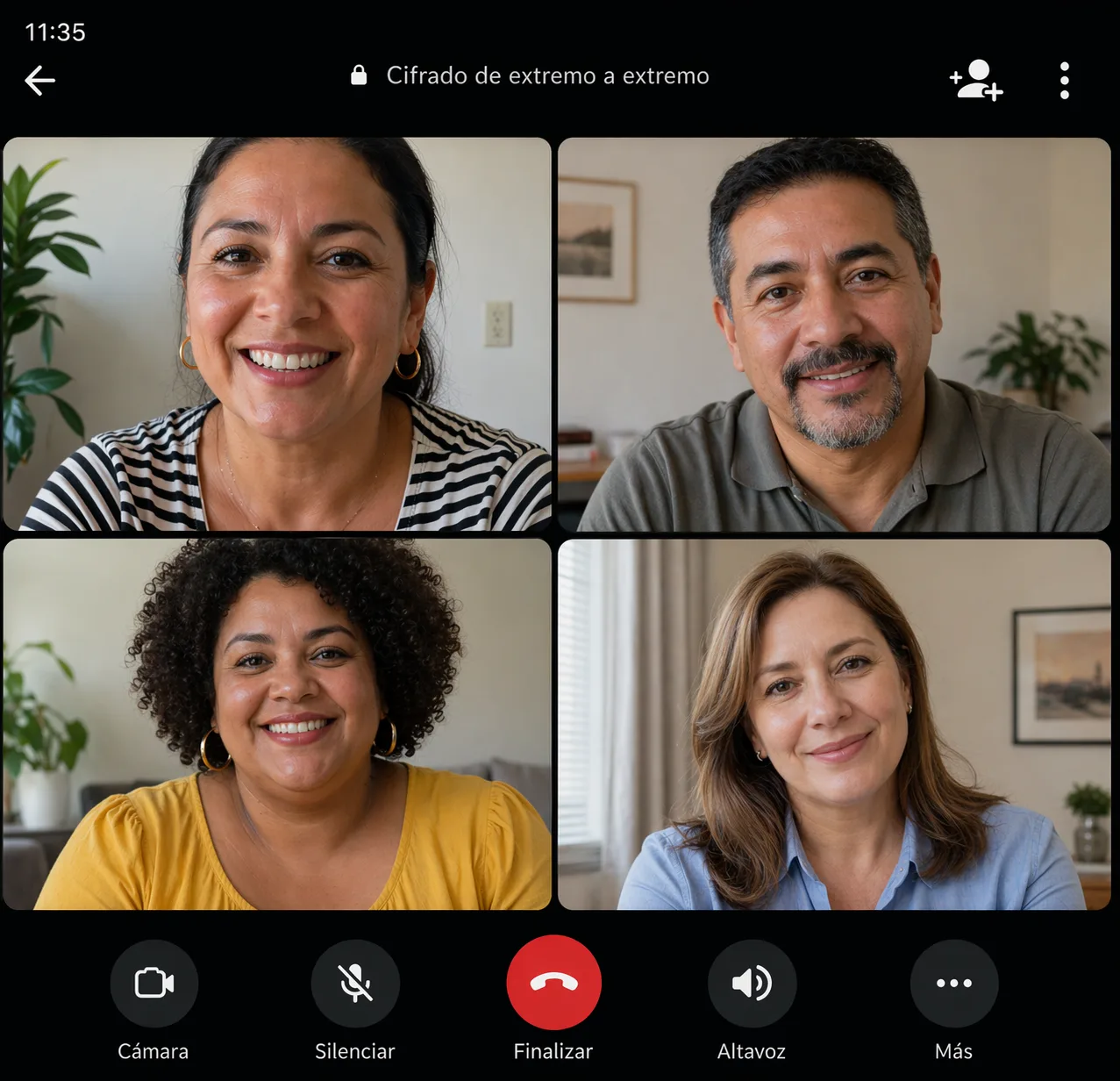
Each weekly session was a live WhatsApp video group, not a broadcast or recorded module, but a real-time group conversation among Hispanic RA patients.
Live video, every week
Sessions were real-time group conversations, not recorded content or asynchronous broadcasts. Participants interacted with each other and with the session leader.
Promotor/promotora-led
Every session was led by a trained community health worker from within the Hispanic community — not a clinical educator, not a health system employee.
Clinically verified content
All information shared in sessions was verified against clinical standards before delivery. Community delivery of clinically sound information, not community delivery of unverified information.
Routine, not interruption
The weekly cadence was designed to become part of participants' lives, not a program they had to remember to attend, but a standing commitment that fit naturally into their week.
Peer-community format
Participants were not students receiving instruction. They were community members sharing experience, asking questions, and supporting each other, with the promotor/promotora as a knowledgeable peer, not an authority figure.
Immediately applicable content
Each session addressed something participants could use in managing their RA that same week: a question to bring to their rheumatologist, a way to explain symptoms to family, a navigation step with insurance.
What 100% retention over two years actually means
Over two years of weekly sessions, no enrolled participant dropped out. That number needs context: chronic disease patient support programs routinely report retention rates of 40–60% over twelve months. A two-year weekly program at 100% retention is not a good result. It is an anomaly that points to something structural about the design.
The structural elements that produced it: a channel patients already used daily, a community format rather than a didactic one, a cultural peer leading each session, a weekly cadence that became part of routine rather than an interruption to it, and content that was immediately applicable to managing RA in everyday life.
Every participant who enrolled completed the two-year program.
Chronic disease support programs routinely lose 40–60% of participants in year one. This program ran weekly for two full years. No enrolled participant dropped out. The design is the explanation, not the disease, not the demographic, and not the platform.
What improved as the program progressed
Patient-reported outcomes over two years of weekly participation
Patient-reported outcomes improved as participation in the support groups continued over the two years. As patients built relationships within the group, shared their experiences managing symptoms and navigating the healthcare system, and received consistent evidence-based guidance from their promotor/promotora, their self-reported disease management confidence and quality-of-life measures trended upward.
The support group was not just a retention success. It was a clinical outcomes success measured through PROs over time. The format that produced 100% retention was the same format that produced improvement in the outcomes that retention was supposed to enable.
A WhatsApp group that ran for two years and kept everyone who joined it is a proof of concept for something the healthcare system consistently underestimates: when you meet Hispanic patients in the channels they trust, led by community members they identify with, the engagement problem disappears.
The design elements that explained the outcomes
- Channel patients used daily for family and community communication.
- Community health worker from within the Hispanic community as session leader.
- Weekly cadence that became routine rather than optional.
- Real-time group interaction rather than broadcast or didactic delivery.
- Clinically verified content delivered through trusted community voice.
- Content immediately applicable to the week's RA management needs.